


June 2026 update: Following the publication of the article below a few months ago, I heard from many people who are interested in saving the Dunsmuir Hellman Estate. You can watch a video featuring a presentation on the topic here. If you want to help with the preservation effort, please sign this Oakland Heritage Alliance petition. I’ll continue to share links and news related to this campaign in this newsletter, so please subscribe to stay updated. -Liam
The Dunsmuir Hellman Estate should be one of the most impressive properties in the Bay Area, but instead the 37-room Neoclassical Revival Mansion is a symbol of Oakland’s failure to protect its cultural legacy. After being purchased by the City in the early 1960s, the 50-acre site served as an elegant and beloved gathering place for holiday festivals, weddings, and concerts for decades. Now, thanks to water damage and deferred maintenance, the mansion is rotting away. Guest dwellings and other structures on the property are boarded up and decrepit. On the great lawn, where revellers dressed like flappers once sipped martinis at the annual Gatsby Picnic, there are now signs warning of roving coyotes. This whole depressing scene is kept hidden from the public by a barbed-wire fence. Lucky for me, there’s a hole in the fence.

For the past few months, I’ve been visiting some of Oakland’s most historic homes1. It all started when I got an email about how the Parks Department is threatening to evict a group of preservationists who manage the Camron-Stanford House, the last grand Victorian on Lake Merritt. The city’s goal is to somehow squeeze more revenue from the property, according to Camron-Stanford House Preservation Association board member Barbara Feyerabend. While researching this situation for an SF Gate article (See: Rare Bay Area Victorian mansion might need to “get rid of everything”), I became fixated on a question that might seem strange for a historian to ask: Why should anyone care about historic houses?
I wasn’t exactly skeptical, but I’ve always been more focused on people, rather than architecture and artifacts, so I’d never seriously considered it. Throughout the Bay Area and beyond, many historic houses are used as mini-museums, community centers, and event venues, but these conversions aren’t easy. Delicate plumbing, limited accessibility, outdated appliances, and many other factors make maintaining historic houses and using them for modern purposes difficult and expensive. If functionality was the only concern, it would make more sense to build a new structure.
I knew there were reasons deeper than nostalgia for preserving these places, so I decided to talk to some of the people, mostly volunteers, who have devoted much of their lives to these efforts. The first person I spoke with was Naomi Schiff, a long time member of the Oakland Heritage Alliance. Naomi’s name often pops up when I’m reading old newspaper articles about preservation battles that were happening in the 1980s and 90s. “There’s value in being able to see the layers of the historic city underneath the present day,” she told me. “It tells us something about what was here. That gives you a connection to place and grounds you in your current reality.”
I call this concept “seeing four-dimensionally.” Walking through downtown Oakland and being able to visualize where the streetcar tracks once ran is an example. It’s a lot easier to do when there are actual historic structures still in existence. It would be silly to think that cities should never change, but holding onto some notable buildings from past eras helps us understand how society evolves, and more tangibly consider the people who lived here before us.
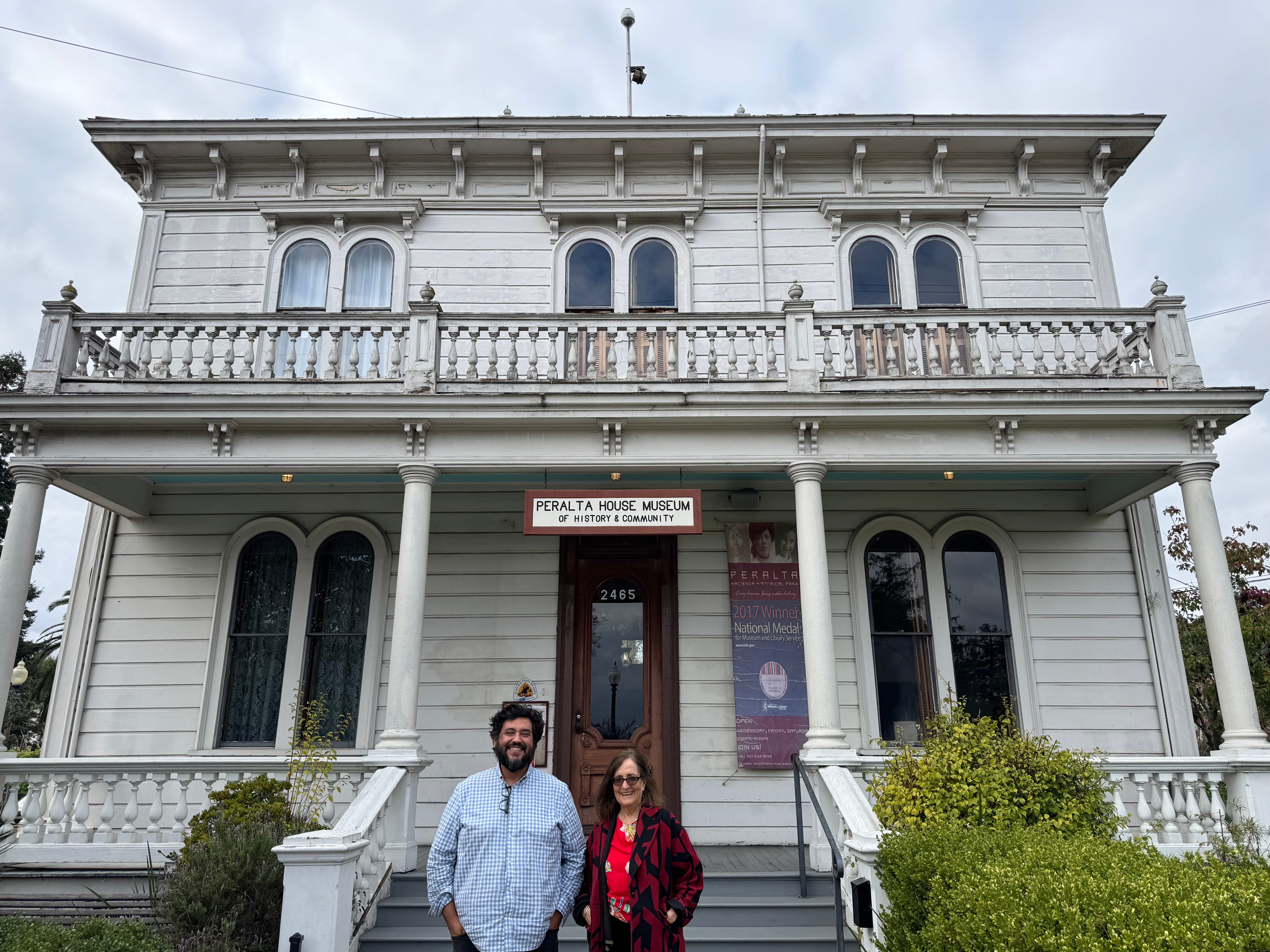
One of the historic houses I visited, the Peralta Hacienda, is a site on the De Anza Trail, a path that traces the origins of Spain’s colonization of California. The Hacienda serves as a mini-museum showcasing the story of the family who were given much of what is now Alameda County as a land grant from the Spanish Crown, but since the 1990s, its mission has expanded significantly. Under the leadership of former director Holly Alonso, the Hacienda became “an archive of community memory.”
Instead of only focusing on 19th century figures, Alonso developed programs to gather and exhibit stories from people in the neighborhood, a district unique for its high density of immigrants (including many refugees) from Central America and Southeast Asia. Alonso told me that it’s meaningful for these marginalized people to see their personal stories on display at one of the Bay Area’s most historic sites, alongside exhibitions about Ohlone culture and Californio pioneers. The Hacienda has even hosted an autobiographical community theater project for day laborers. Especially during this political climate of extreme xenophobia, the Hacienda stands as a monument to the fact that California has always been a melting pot of immigrants, a message that hopefully brings some validation to nearby residents currently living in fear of ICE raids.
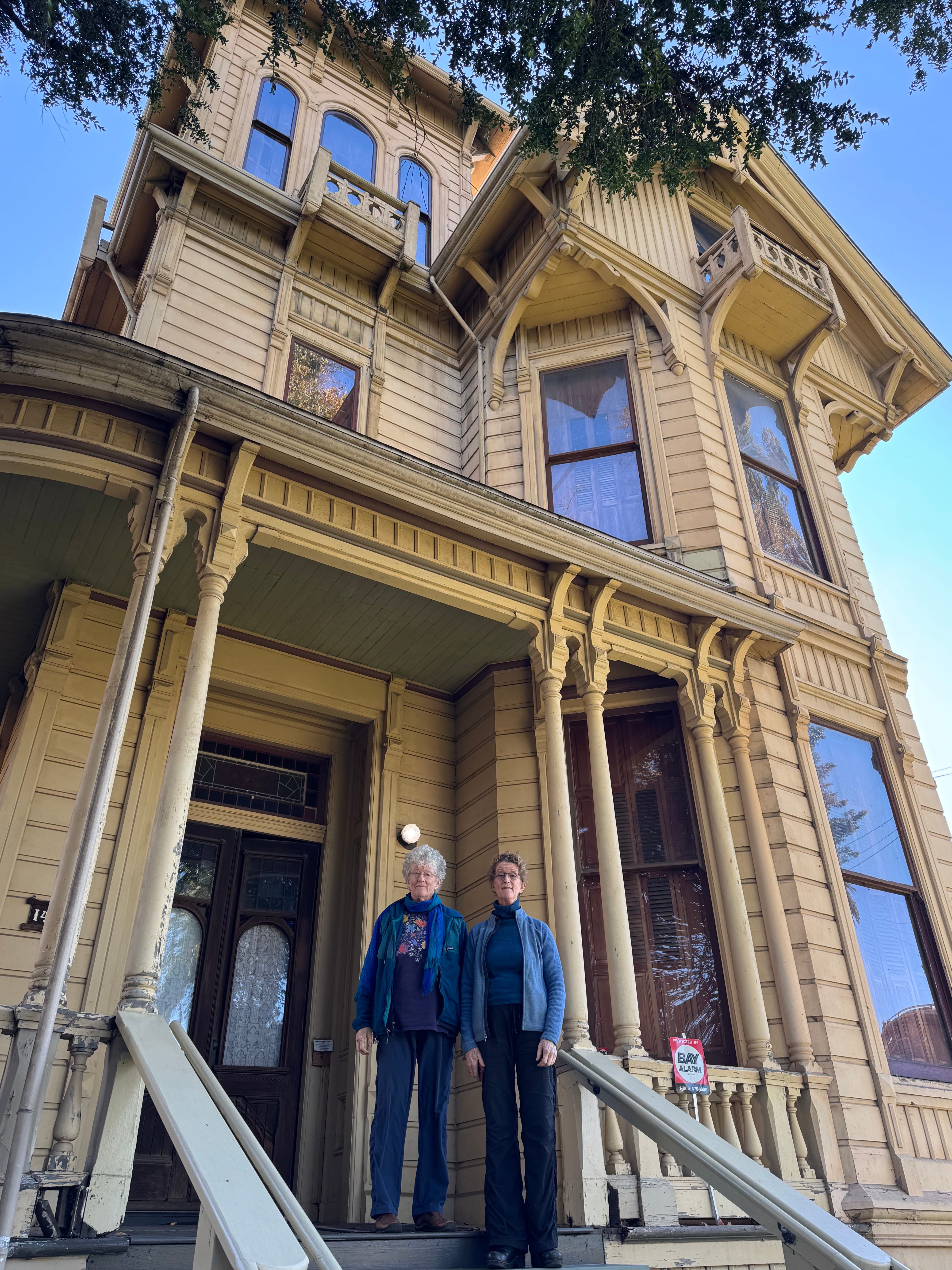
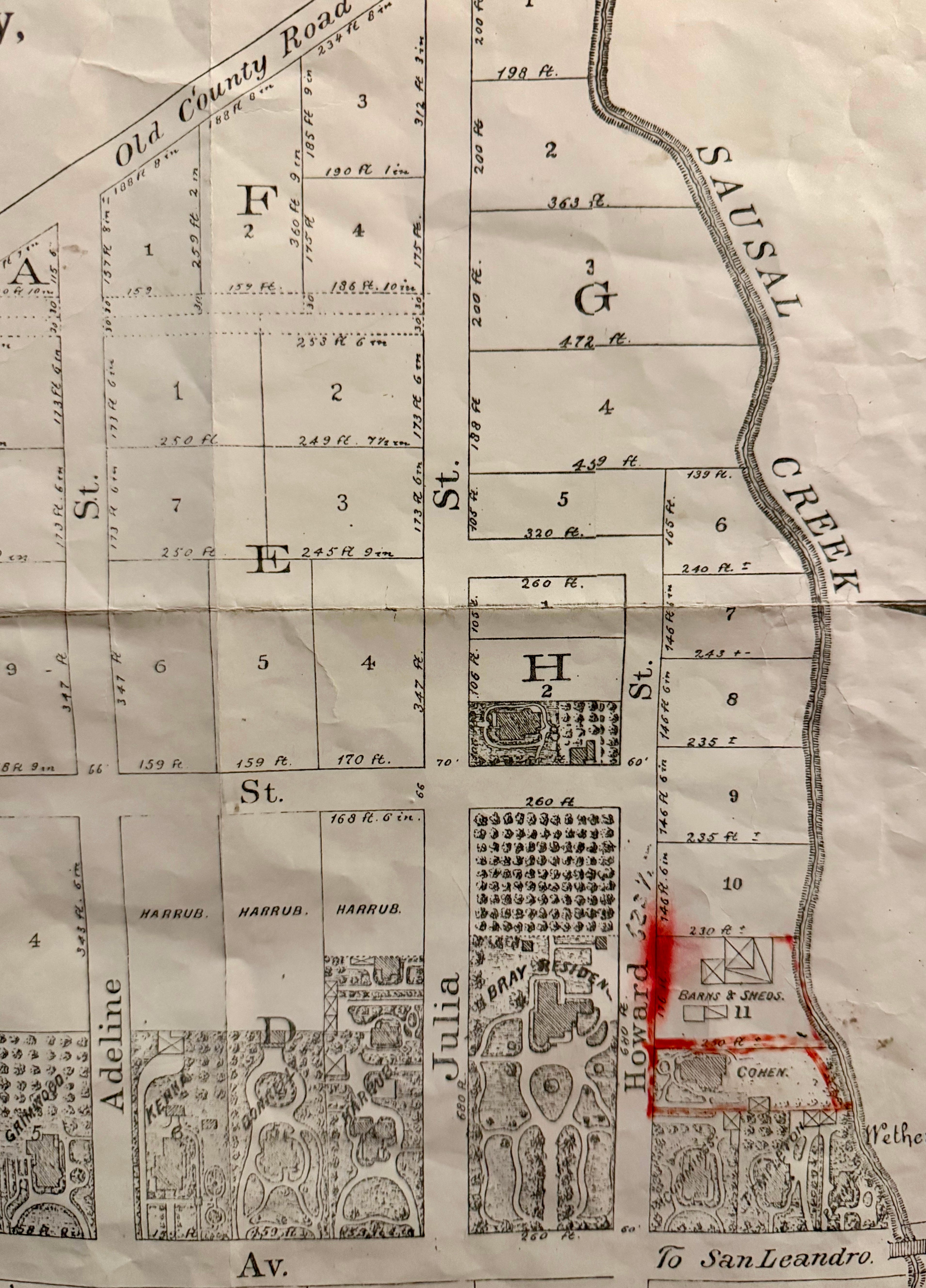
Just one mile downhill from the Peralta Hacienda, Fruitvale’s Cohen-Bray House offers a very different example of how a historic home can operate. Constructed as a wedding present in 1884 for Emma Bray and Alfred Henry Cohen, the house was barely saved from debt collectors when the family fortune was embezzled away by a shady business partner. Due to lack of funds, the house inadvertently became a time capsule, because the family members who inherited the property never had sufficient cash for remodelling or other major expenses. Carpets, wallpaper, much of the furniture, and even some kitchen appliances are more than a century old.
Now Patty and Nancy Donald, great-granddaughters of the original inhabitants, are working with volunteers to preserve the weathered property and transform it into a community workshop for learning craftsmanship and archiving skills. College students from local museum studies programs have interned there; a workshop in the backyard is utilized as a kind of “maker space” for ongoing restoration projects. Whether hosting aspiring artisans or school field trips2, Patty told me “the importance of saving the old is to learn from it.”
While I was visiting, Nancy showed me a receipt that she discovered in her great-grandfather’s wallet. The yellowed invoice listed hundreds of pear, orange, plum, apricot, and peach trees that her ancestors had planted nearby, not far from where Sausal Creek once flowed free, before it was buried in an underground culvert. Sitting in this house, looking at this frail document, it suddenly became much easier for me to imagine a Fruitvale full of orchards. This experience felt important, like a new level of connection to the land that I’ll carry with me whenever I’m in the neighborhood, which is just a few blocks from where I live.
Last summer, when the Art Deco Society of California announced that it would be relocating the annual Gatsby Picnic that had been held at the Dunsmuir Hellman Estate for nearly 40 years, board member Sarah Rice explained the decision in a blog post:
“The mansion, which we used to be able to tour, has fallen into a state of disrepair. Even after the interior was closed off, we were allowed to continue using the porch for photos. Now the porch has been left to the same fate as the rest of the building making it too dangerous to use as well. Furthermore, leaks in the roof have allowed water incursion and the building is apparently infested with mold. The abandoned swimming pool and adjacent buildings are in imminent danger of collapsing… the grounds themselves have been left to deteriorate. It has gotten to the point where we don’t believe that it is safe for a large group of people and vintage cars to venture onto the central field without risk of injury.”
The Estate is tucked away in the southeast corner of the Oakland foothills, nestled between a patch of forest and a residential neighborhood on the San Leandro border. I’d never been there, but given its precarious state, I felt like I needed to see it for myself, before it was too late. Once places like this decay past the point of no return, they’re gone forever. No one will ever build another 37-room Neoclassical Revival Mansion in Oakland.
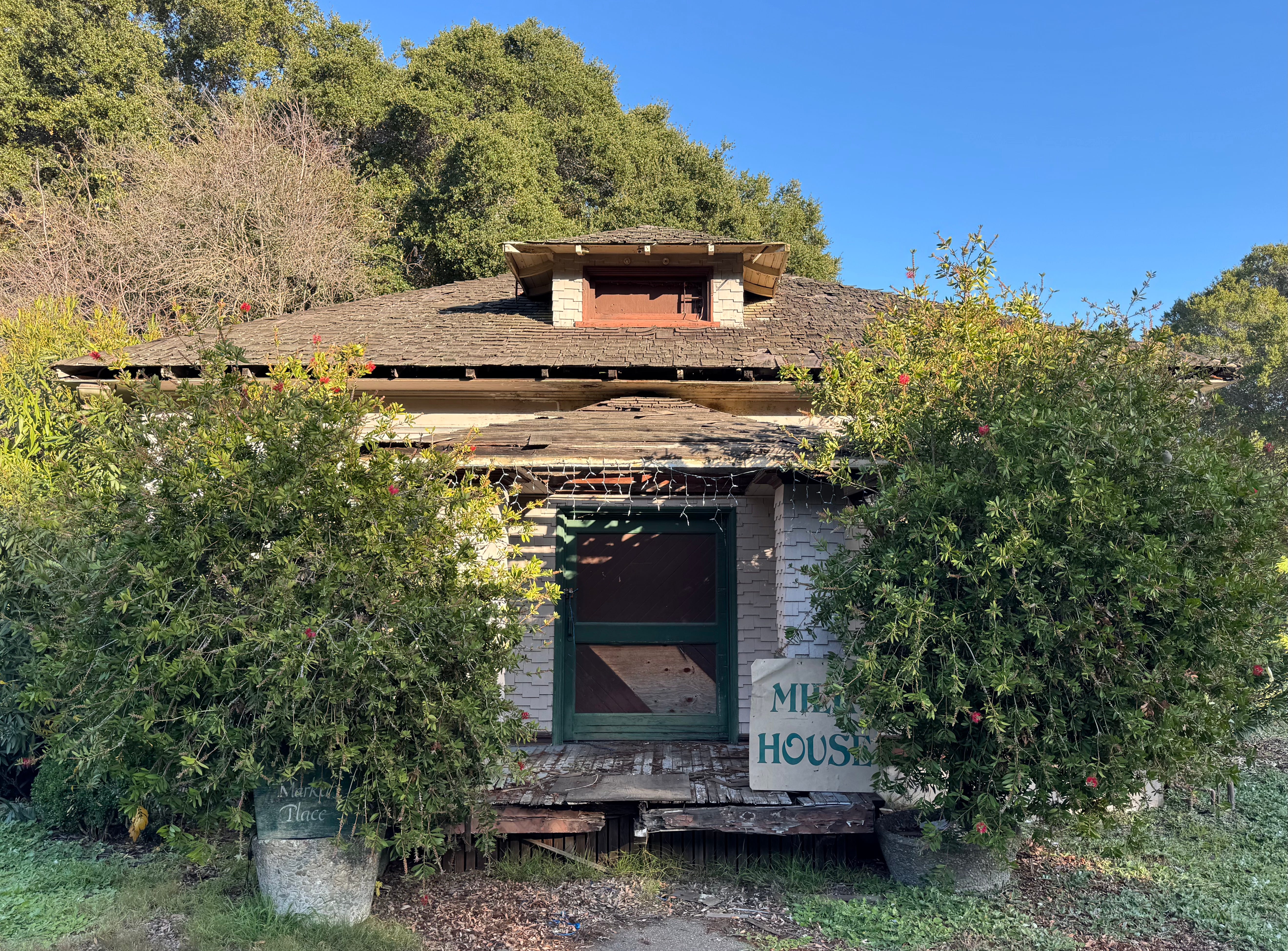
I was greeted at the barbed-wire gate by a sign announcing that the Oakland Police would be using the estate for “K-9 TRAINING” on December 15, 2025. Fortunately, I was there on the 14th, so the cops weren’t there yet (I hoped). It took about 30 seconds to find a hole in the fence, so I ducked in and began my tour. The first building I encountered along the wooded path was the carriage house, which looked abandoned, but not too shabby. Then, as I kept going, things got worse. The grotto, milk house, and other structures were being overtaken by shrubbery, Planet of the Apes style.
I was expecting to see the mansion in awful shape, but when it finally came into view from across the great lawn, I was stunned – it looked incredible, gleaming white with half a dozen red brick chimneys protruding from the roof. After glancing around to make sure there weren’t any security guards or coyotes, I jogged over for a closer look.
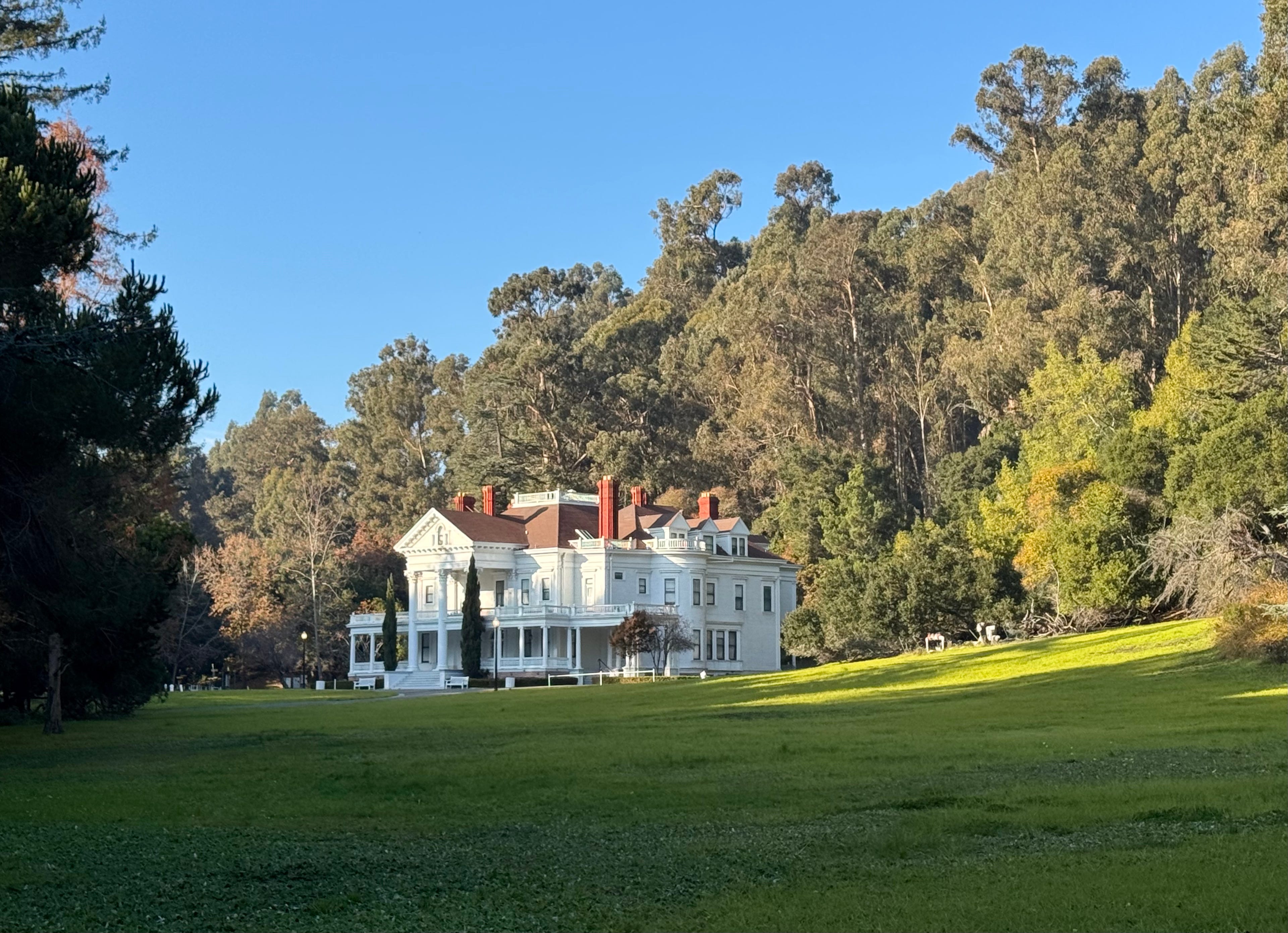
Even though I’d seen photos, the house was much bigger than I’d expected. Standing beneath the huge pillars that dominate the portico, I instantly understood why Dunsmuir has been used as a location for several Hollywood productions, including films like Phantasm, A View to Kill, and So I Married an Axe Murderer. Some of the paint was peeling, but at least the facade didn’t appear to be in shambles. An inspection of the backside revealed cracked wood panels, but nothing too devastating. I was happy to see that salvation seems possible, at least from the outside.
As I started walking back to the road, my hopefulness began to sour. Even before Oakland’s current budget crisis, the estate had been neglected. Now that the town’s finances are even more dire, the chances that creeping mold problems and water damage will be remedied soon are negligible. Obviously keeping schools open and paving roads should be prioritized, but in the meantime, Dunsmuir’s deterioration will continue, perhaps beyond repair.
If that happens, Oakland will have lost more than just a big old house. It will lose a connection to a past era that can never be replaced. And future generations will never get to “step back in time” to experience this special place that was once enjoyed by so many. It’s not too late yet, but it will be soon.
If you enjoyed this essay, please check out the latest episode of the East Bay Yesterday podcast – How to Save a House: Meet the People Maintaining Some of the Bay’s Oldest Homes
East Bay Yesterday News, Notes & Events
Boat tours are back! I just posted dates for the first history cruises of 2026. Read all about them them here – and don’t wait too long to get tickets. They tend to sell out quick. (Shoutout to the comrades at Bay Area Current for including my boat tours in their holiday gift guide.)
Speaking of selling out, I’m doing an encore presentation of “Bay Aerial: Watching our Region Transform from Above” on February 13 at La Peña Cultural Center in Berkeley. I did this show last month at Local Economy, but lots of folks couldn’t get tickets and asked me to do it again. OK! Here’s a brief summary of what to expect: “What does looking at half a century of aerial photography reveal about the Bay Area’s ongoing transformation? These photos show much more than changing landscapes – they illustrate the values, circuitry, and impact of our civilization, for better or worse…”
For my latest SF Gate article, I did a ride-along with the Bar Pilots, an elite group of sea captains who navigate some of the largest ships in the world through the Bay’s notoriously narrow channels. Check it out here: “The hidden captains keeping San Francisco Bay safe for 175 years”
Finally
My friends over at Oakland Review of Books have launched a new effort to curate collections of “novels, academic monographs, poetry anthologies” and other media about, you guessed it, Oakland. Want to contribute to this infinite syllabi? Acquaint yourself with the ambitious project here - and while you’re dropping in on the ORB, be sure to subscribe to their weekly events calendar (which also hilariously includes events to avoid, i.e. Joe Manchin at The Paramount. Gross.)
Thanks for reading!
Liam O’Donoghue
PS: If you want to see more photos of Oakland’s historic houses, I’ve posted a few recently on the East Bay Yesterday Instagram page.
For the purposes of my research, I’m defining “historic houses” as places that are (or should be) serving some kind of public purpose, not private residences that are still primarily being used as single-family dwellings.
The Cohen-Bray House hosts tours every third Sunday. The next volunteer training is happening on January 10.
Thanks for your investigation, reporting and serious thoughts on the value of saving treasures in our own Oakland backyard.
This is such a sad commentary on the continued state of affairs in Oakland. Yes, education and decent roads need to be prioritized, but these old mansions are what give cities their character and help people understand history of a place. We should be able to do it all! I remember going to Dunsmuir House for a Christmas tea and tour in the late 80’s with my mom and aunt who drove from San Jose. I hadn’t lived in the East Bay for long, but I was so excited to take them to such a historic home. Your photo of the house from a distance looks as I remember it.